
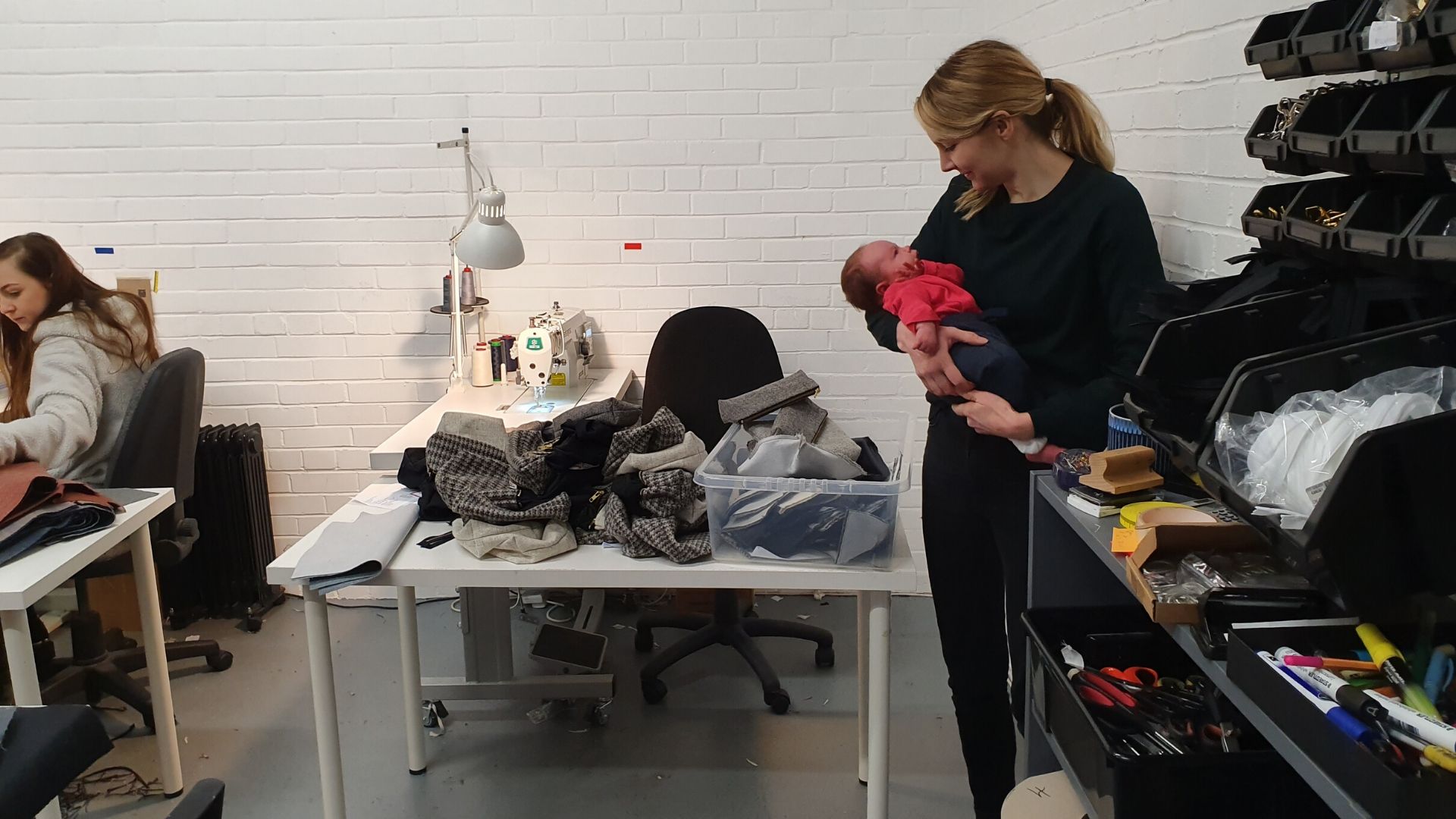
I put this question to the team at Kalopsia, they are a clothing and accessory manufacturer in Edinburgh.
Kalopsia is:
- Woman Boss
- Running a factory in the city of Edinburgh
- Manufacturing textile products
- A circular business model
- A social enterprise, paying a living wage
It’s no wonder they are picking up awards and being lauded on an international stage (Aileen McLeod MEP shares their work at the G7 alliance workshop for resource efficiency on value retention policies presenting Scotland’s circular economy in textiles story in Paris today 19th Nov 2019, attended by Adidas, Nike and many more).
Kalopsia is headed up by Nina Falk (and side-kick Adam Robertson). They are a factory, in a city and carry out all manufacturing on their premises; they’ve been trading since 2013. So granted, it’s a relatively new business, still – their client list is enviable.
As I write this, I can see their “whiteboard” of client requests – it’s full to bursting; admittedly it is mid November, the Christmas rush is in full swing.
Kalopsia have a clever business model, they show the products they make and hold their clients to account if they choose to deviate too far from their “ASSEMBLE” templates. The reason – they have all been designed to minimise waste.
For example all the garments designed for women have pockets inserted into seams, there is no distortion in the cut (there are no “body-form” items).
Nina tells me this is for three reasons:
- Include off-cut pieces in the final garment.
- Reduce the likelihood of women being mugged! Thieves target handbags.
- Comfort – somewhere to put your hands.
They are audited by Zero Waste Scotland to meet ambitious circular economy goals. So, I ask, why choose poly-cotton for your accessory bag linings?
“The main reason is durability, we tried 100% cotton in a gsm weight that does not distort the design or add disproportionate weight to the bag and it gave way. It just didn’t last anytime time at all. It would mean consumers would create more waste. A decent polyester that we managed to source just looked and felt not-good (substandard). The thing about the poly-cotton mix we use, apart from being more durable and making the bags last longer, you can split the fibres, it can be recycled!”
If you were them what would you do? It seems like a good answer to me.
There is a lot of thought and consideration put into each and every request for product. This all spawned from Kalopsia’s involvement in the Scottish Government campaign in 2015 titled #makingthingslast.
Scotland’s Environment Secretary Richard Lochhead launched the campaign challenging members of the public to #MakeThingsLast by repairing, recycling or remanufacturing their unwanted goods. The campaign followed on from the introduction of the 5p single-use carrier bag charge, and aimed to help reduce waste in Scotland.
Kalopsia continue to march to this drum. With strong opinions and a fierce drive to make the world a better place, Nina (with a 5 week old baby as I write this, see above) is succeeding in building a social enterprise that not only pays a fair wage and also supports the local and wider UK textiles community.
Additionally they support big brands that are otherwise being persecuted by the uncertainty of Brexit by producing exemplary product, locally.
Visit KALOPSIA to find out more.